This statement gives a review of the performance of Seasonal rains (November 2009 to April 2010) in the unimodal areas (Western, Central, Southern, Southwestern and southern coast) and the Masika rains in the bimodal areas (Northern coast and hinterland, Northeastern Highlands and Lake Victoria basin) from March to May 2010, also the outlook for the period staring June, 2010.
A: SUMMARY
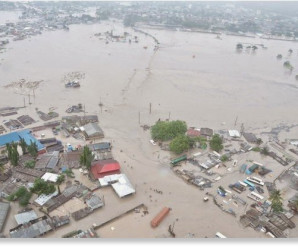
The performance of Seasonal rains (Msimu) from November 2009 to April 2010 over the unimodal areas faired well over most areas. Mainly above normal rainfall was observed during the month of November and December 2009 extending to early January 2010. El Nino conditions continued over the Equatorial Pacific Ocean thus enhancing rainfall at various areas. However, the western areas received poor rainfall distribution followed by earlier recession over some areas.
The performance of the long rains (Masika) over bimodal areas generally indicates average distribution of rainfall occasionally accompanied with episodes of above normal rainfall in small areas. Moreover, due to the presence of El Nino extended short rains (Vuli) were observed over bimodal areas specifically over Lake Victoria basin and Arusha region where above normal rainfall occurred in February 2010
(i) Seasonal rains (Msimu)
Seasonal rains over the unimodal areas started early in November 2009 and progressed well over most areas. Above normal rainfall was observed over most areas during the months of November and December2009. Above normal rainfall was observed over Southwestern highlands (Mbeya, Iringa and Rukwa regions) including Central areas (Dodoma and Singida regions). During November-December 2009 Lindi and Mtwara region received below normal rainfall. However, for the period starting from January 2010 Mtwara and Lindi regions received normal to above normal rainfall that was adequate for different applications.
(ii) Long rains (Masika)
The on set of the Long rains (Masika) started at the beginning of March 2010 and spread to other areas towards the end of the month (i.e. March, 2010).
Rainfall performance based on long term cumulative means for the unimodal areas indicates that most areas received normal to above normal .Although the rainfall over the Northern coast started in the first week of March 2010 it had poor distribution during the month. From April to May 2010 rainfall featured well over most areas except over few areas where below average rainfall was observed. During the month of April and early May 2010 above normal rainfall was observed over Dar es Salaam, Tanga and the Island of Pemba.
B: RAINFALL PERFORMANCE
(i) Climate Systems:
During the Seasonal rainfall (November2009 to April2010) and the Long rains (March to May, 2010) Sea Surface temperatures over the Equatorial Pacific continued to be above average indicating the persistence of El Nino over the region. On the other hand, Sea Surface Temperatures over South West Indian Ocean improved during the Masika season that led to enhanced moisture supply over the East African Coast.
Currently Sea Surface Temperatures over the Equatorial Pacific Ocean has declined to near normal conditions. This indicates that El Nino has decayed significantly and come to the end. However, it should be noted that the impacts of El Nino on Climate Systems will take a while to recede. Moreover, the Indian Ocean is still showing warmer conditions near the Tropical region as well as over the Southwest region.
(ii) Rainfall:
Rainfall amounts and performance based on long term cumulative means for some stations are shown below.-
1) Seasonal rains 2009/2010
NOV 2009-APRIL 2010
CENTRAL
WESTERN
STATION
Singida
Hombolo
(Dodoma)
Dodoma
Tabora
Tumbi
(Tabora)
Kigoma
Kibondo
TOTAL (mm)
642.5
601.8
491.4
884.1
877.3
1021.9
975.8
%MEAN
99.4
95.3
131.1
102.6
64.0
60.4
108.6
NOV2009-APRIL2010SOUTH WESTERN
SOUTHERN
STATION
Iringa
Igeri
(Njombe)
Mbeya
Sumbawanga
Mahenge
Songea
Kilwa
Mtwara
TOTAL (mm)
432.7
1181.4
803.4
835.2
1631.1
962.3
854.1
1117.3
%MEAN
78.7
94.0
91.9
95.6
84.4
89.3
103.2
122.2
2) long rains (Masika) 2010
MARCH-MAY2010
COASTALAREAS
STATION
Pemba
Matangatuani (Pemba)
Tanga
Handeni
Zanzibar
JNIA
Port-Dar
Kibaha
Ilonga
(Kilosa)
Morogoro
TOTAL (mm)
1185.6
1372.1
634.8
351.6
661.7
649.2
450.8
414.6
509.2
392.9
MEAN
975.7
916.9
642.0
394.0
862.2
417.6
537.8
529.5
475.0
550.9
%MEAN
121.5
149.6
98.9
89.2
76.7
155.5
83.8
78.3
107.2
71.3
MARCH-MAY2010
LAKEBASIN
NORTHEASTERN
STATION
Bukoba
Mwanza
Ukiriguru
(mwanza)
Musoma
Shinyanga
Arusha
Moshi
KIA-
Babati
Same
TOTALS (mm)
845.9
401.3
391.3
568.8
229.2
479.3
664.0
349.4
356.3
268.1
% MEAN
95.2
105.3
115.9
140.1
78.5
109.6
109.5
113.2
96.7
102.9
C: WEATHER OUTLOOK FOR JUNE-JULY-AUGUST (JJA 2010)
Sea surface Temperatures over the Indian Ocean is likely to remain slightly warmer, indicating a likelihood of rainfall conditions over the Coastal areas and Southwestern highlands for June-August 2010.
Cold weather systems over the Southern Africa are likely to be associated with moderate advection of cold air towards the southern parts of the country during the coming months.
Lake Victoria Basin (Kagera, Mwanza , Mara and Shinyanga regions): are expected to feature some showers and thunderstorms over few areas especially Kagera, Mwanza and Mara regions. The rains are expected to be mainly normal.
Northern Coast (Dar es Salaam, Tanga, Pwani, Nothern Morogoro, and Isles of Unguja and Pemba): Outbreaks of rainfall are likely to occur over the costal belt.
Northeastern Highlands (Kilimanjaro, Arusha and Manyara regions): Light showers are expected mainly over high grounds. Partly cloudy and cold conditions are expected during night and early morning hours.
Western (Kigoma, Northern Rukwa andTabora regions):
Some showers are likely to occur over Kigoma region. Generally dry weather conditions are expected elsewhere.
Central (Singida and Dodoma regions):
Generally cold, dry conditions and long sunny periods
Southern Coast (Mtwara and Lindi):
Partly cloudy condition and long sunny periods. Some light rain is expected along the coastal belt.
Southwestern Highlands (Mbeya, Rukwa and Iringa regions):
Mostly cold and chilly weather during night and morning hours, light showers are also expected mainly over high grounds.